
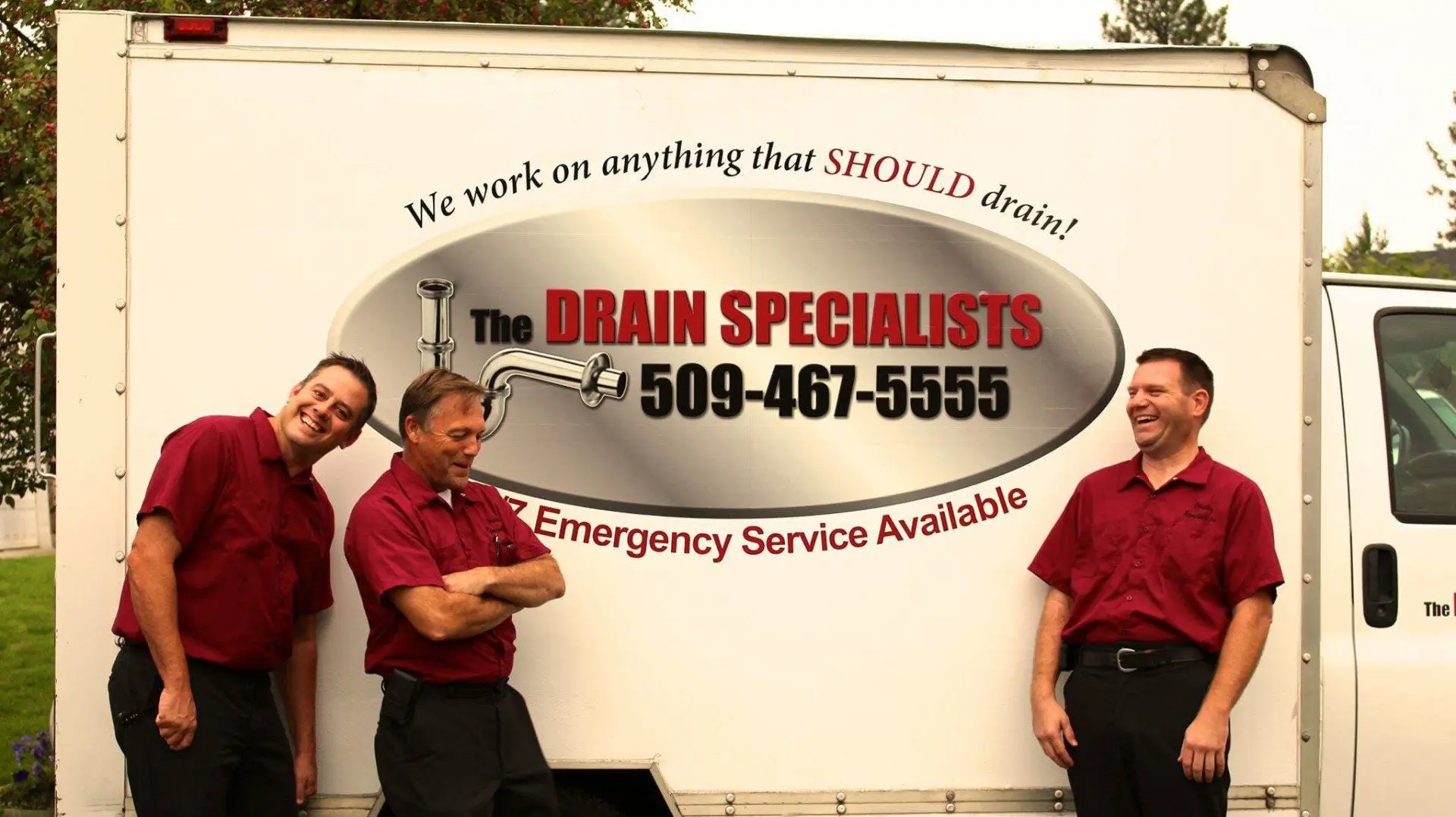



Spokane Drain Cleaning & Sewer Services
Most drain jobs in Spokane follow the same basic path. You reach out, we ask a few quick questions about what's backing up and where, then we schedule a visit (same-day service is available). When we arrive, we confirm the symptoms in person, choose the right access point, and clear the line with professional drain-cleaning equipment sized for that drain or sewer. Before we leave, we verify flow, clean up the work area, and explain what caused the clog and what to watch for next.
That order matters. Skipping straight to "snake it" without confirming what's actually blocked can waste time and leave you with a drain that runs for a day, then slows right back down.
Drain Cleaning & Sewer Services in Spokane: what we clear and why it matters
Drain cleaning is the work of removing the material that's restricting flow inside a pipe. Sewer service focuses on the main line that carries wastewater out of the house. Both problems show up the same way: slow drains, gurgling sounds, water that backs up where it shouldn't, and that sewer odor nobody wants lingering in the house.
In Spokane, we see clogs tied to everyday use and to the way properties are built and used over time. Kitchen lines catch grease and food solids. Bathroom lines collect hair, soap buildup, and the "flushable" wipes that don't break down. Laundry and utility drains can load up with lint and residue. Main sewer lines can get hit with heavier obstructions that affect multiple fixtures at once.
The consequence isn't just inconvenience. A restricted line increases pressure in the system and raises the odds of overflow at the lowest point, like a basement floor drain or a first-floor tub. If wastewater has nowhere to go, it goes where it can.
How we clear clogged drains in Spokane, step by step
Good drain work is controlled and deliberate. Our goal is to open the line safely without damaging the pipe or making a mess of your home.
- We narrow down the problem. We ask what fixtures are affected, how long it's been happening, and whether the issue comes and goes. That tells us if we're dealing with a branch drain (one fixture) or something closer to the main line (several fixtures).
- We pick the right access. Clearing through the correct opening matters. Depending on the situation, that's a cleanout, a trap arm, a roof vent, or another approved access point. The goal is a straight, controlled route to the blockage.
- We match the tool to the pipe. Different drains call for different machines and cable sizes. A small bathroom line isn't treated like a main sewer. We select the proper setup and cutting head for the type of clog we're removing.
- We break up and remove the obstruction. Drain cables clear by working through buildup, pulling material back, and restoring the inside diameter of the line where the blockage formed. For tougher buildup, the head selection and technique matter as much as brute force.
- We confirm flow. We run water and check how the system behaves under normal use. If the drain still struggles, we keep working until we get consistent, steady flow.
- We leave you with clear next steps. If the blockage points to a deeper issue (repeat backups, heavy root intrusion, a damaged section of pipe), we explain what we found and what the next logical step is.
This is where experience counts. The Drain Specialists bring over 40 years of combined drain experience to work in Spokane, and Eldon (Service Manager) keeps the standards tight on how jobs are approached and completed. We're licensed (#CCDRAINSDS88907), bonded, and insured, so you're not gambling on who's opening up your line.
Main sewer line backups: how they start and how we approach them
A mainline problem behaves differently than a simple sink clog. When the sewer line is restricted, you'll often see symptoms in more than one place. A toilet may bubble when you run a sink. A tub might back up when the washing machine drains. Floor drains can become the "escape route" for wastewater.
What causes it? The sewer line carries everything out of the house, so it's exposed to heavier loads. Common contributors include:
- Build-up over time from paper, waste, and residue that catches on rough spots inside the pipe
- Foreign objects that don't belong in a toilet or drain
- Root intrusion where roots find moisture and grow into small openings, then trap debris
- Pipe damage or misalignment that creates a constant snag point
Sewer clearing isn't just "bigger tools." The approach has to protect the line. Too aggressive of a cutting head in the wrong pipe can do real damage. Too gentle of an approach leaves packed debris behind and the problem returns quickly. We treat mainline work like what it is: a critical system that needs the clog removed without harming the pipe.
If your sewer problem keeps returning, that's a sign you need more than a quick pass through the line. It usually means there's a recurring catch point: roots, a sag, or a rough internal surface that grabs debris. In those cases, the value is in identifying the pattern and responding with the right clearing method, not repeating the same short-term fix.
What to do (and not do) while waiting for drain service
A few smart moves protect your home and make the drain cleaning visit go faster.
- Stop using water at the problem fixtures. If the drain is already slow, pushing more water through can trigger an overflow.
- Skip the chemical drain cleaners. They often don't clear the clog and can leave harsh liquid sitting in the pipe, which makes hands-on clearing more dangerous.
- Contain what you can. If a toilet is threatening to overflow, shut off the water supply valve behind it. If a sink is full, avoid running the disposal or adding more water.
- Clear access. Move stored items away from the cleanout, under-sink area, or the spot where the backup is showing up. Give us room to set equipment and keep the area clean.
- Tell us what changed. A clog that started right after a big gathering, a remodel, or repeated "it works, then it doesn't" behavior helps us choose the right starting point.
If you've had a backup that involved wastewater, avoid contact and keep kids and pets away from the area until it's cleaned and disinfected. Clearing the line is step one; keeping the area sanitary is step two.
Drain and sewer questions Spokane customers ask
Is a slow drain the same thing as a clogged drain?
A slow drain is a clog in progress. Flow gets restricted long before it stops completely. Clearing it early usually takes less work and reduces the chance of a messy backup.
Why does one drain clog again after it was "snaked" before?
If the line was only punched through, a layer of buildup can remain on the pipe wall and catch debris again. Repeat clogs also point to a mechanical issue like roots, a damaged section of pipe, or an ongoing habit that keeps feeding the problem.
How do I know if it's my main sewer line or just one fixture?
If multiple fixtures act up, or if you see water coming up from a floor drain when you run another fixture, think main line. If only one sink or tub is affected and everything else is normal, it's usually a branch drain.
Should I use a store-bought drain opener before scheduling service?
No. Chemical openers rarely clear the kind of blockage that causes backups, and they can create a hazard for anyone working on the line afterward. Stopping water use and getting the drain mechanically cleared is the safer path.
What's the difference between drain cleaning and sewer cleaning?
Drain cleaning targets smaller lines serving individual fixtures (sinks, tubs, showers, laundry). Sewer cleaning targets the main line carrying wastewater out of the house. The symptoms can overlap, but the access points and clearing approach differ.
If a drain in your Spokane home is slow, noisy, or backing up, it's telling you something. The sooner it's cleared correctly, the less likely it is to turn into an overflow you have to mop up.
To schedule drain cleaning or sewer service in Spokane with The Drain Specialists, reach out online and share what you're seeing. Tami, our Office Manager, will get you on the calendar and make sure the technician arrives with the right context to solve it cleanly.
